Showing posts with label print advertising. Show all posts

Sunday, February 5, 2017

Print Ads on Super Bowl Sunday

Advertising is more than TV commercials and social media. Advertisers even use legacy media like print -- newspapers and magazines -- to reach audiences. Today, for example, is a day when football fans read the sports section in a local or national newspaper for more detail about the teams playing in the Super Bowl.

The entire back page of today's New York Times sports section has the lighthearted ad from Bud Light, shown at top. It sings the praises of "the official holiday of Friendship"--meaning the Super Bowl, but not named as such. A clever ode to sports being an opportunity for friendship and fun, positive brand associations that Bud (an official Super Bowl sponsor) wants to encourage.

The Bud Light website requires visitors to submit their birthdate to enter, as shown here. If you want to see the new Bud Light commercial and other A-B commercials being aired tonight, they're already online.

Inside the same New York Times sports section is a full-age ad from Gatorade, titled "An Open Letter to Athletes..." and singing the praises of serious athletes "pursuing your dreams, setting your goals and giving it all you've got...We are too."

Fans are speculating about which color Gatorade will be poured over the winning coach's head tonight in Houston. Or for interactive brand engagement, just go all Snapchat and dunk your selfie in the Gatorade color of your choice. Gatorade says last year's Snapchat dunk opportunity resulted in 165 million impressions.

Sure, Super Bowl commercials reach a huge audience, but print and other promotions also reach targeted audiences with specific messages that support brand image and personality.

Wednesday, June 15, 2016

Fortune 500 Issue Has Fewer Pages Than in Past 3 Years

This is the time of year when Fortune publishes its door-stop-sized issue listing America's 500 largest corporations. Since 1998, I've tracked the number of pages per issue, which is suggestive of the economic situation because of the number of ads and, therefore, the size of the issue. 

The 2016 issue, alas, is not as fat as 2015, 2014, or 2013, going by the numbered pages. It's only 10 pages bigger than the 2008 issue, which came out in the year of the financial crisis. But then again, this is an election year, which may affect advertising decisions and budgets. 

Another major factor is the increase in digital advertising, which is partly responsible for the plateau (at best) or decline in print advertising overall.
 
2016: 346
2015: 392
2014: 390
2013: 352
2012: 312
2011: 316
2010: 308
2009: 276
2008: 356
2007: 386
2006: 384
2005: 410
2004: 478
2003: 410
2002: 402
2001: 474
2000: 630 - Peak of dot-com boom!
1999: 510
1998: 506

Friday, May 13, 2016

Neuroscience Helps Advertisers Connect with Audiences

Neuroscience research is helping advertisers determine what catches the audience's attention, what people remember and why, what tugs at their heart strings and what makes them yawn.

For example:
  • Print ads can stick in the memory because of the involvement in recognizing, comprehending, and processing words and symbols.
  • Ads with emotional content are much more effective than those without.
  • Ads embedded in mobile entertainment shouldn't interrupt the game before an important play.
  • Ad content should connect with the audience's objectives.
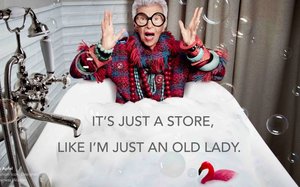
At top, an example of what can make an ad engaging and memorable. It engages at multiple levels, as the audience sees the unusual image of a fashionable, fully-dressed woman in an updated version of the old-fashioned bathtub (notice the red swan instead of the usual yellow duckie in the bubble bath). The words are also engaging--few ads use language like "old lady." If you recognize this fashion plate "old lady," you'll really get the comparison. Even if you don't, you'll smile and be intrigued by the image, the words, and the comparison.

The store is Pirch, and the "old lady" is Iris Apfel, known for her distinctive sense of style. The CMO says, "We looked at this campaign from the approach of explaining and establishing Pirch as a lifestyle, experiential brand." An interesting ad that puts a different spin on "experiential" to attract attention.

Saturday, March 21, 2015

Net-a-Porter's Print Magazine Sells

Printed magazines are not obsolete--in fact, they can be powerful marketing tools for advertisers and publishers.

Case in point: Net-a-Porter's year-old Porter magazine, $10 per glossy issue and published every other month for affluent fashionistas. With 152,000 readers in 60 nations, Porter is gaining ground and helping advertisers reach a very desirable audience of women who spend $34,000 yearly on fashion.

One-quarter of the magazine's readers are in the US, 17% are in the UK (where Net-a-Porter began its e-commerce only empire), and other sizable audiences are in France, Germany, and Australia. (Figures are from the magazine's .pdf media kit, viewable here.)

Porter isn't just in print. It's also available for all digital platforms, complete with app, which is important because the magazine allows readers to scan and buy what they see, instantly. The media kit calls it "52 weeks of original shoppable content." This sales capability makes all the difference. No wonder top style brands like Chanel and Ralph Lauren want to advertise in Porter.

Not surprisingly, Porter is social-media savvy, with 47,000 Facebook likes. Net-a-Porter, founded in 2000 as an online-only upscale fashion retailer, has been owned by France's luxury firm Richemont since 2000.


Thursday, October 16, 2014

Black, white, and green all over: newspaper merchandise

If you've opened the New York Times lately, you know that the "grey lady" has its own merchandise for sale. You can't miss the full-page ads on Sunday, marketing everything from its own photographs to front page reprints to logo-emblazoned T-shirts, caps, and keychains. Other merchandise includes vintage typewriters, baseball memorabilia, and personalized gifts for all ages and special occasions (see wedding gift, above). The Times also markets "journeys" such as small group tours of historic places or areas with special political significance.

With print advertising revenues down and fewer US consumers getting their news primarily from newspapers, merchandise marketing has two benefits for papers: it boosts revenues and it appeals to loyal media brand fans who want to be identified with that paper. NY baseball fans might wear a Yankees or Mets cap, while NY news fans might wear a NY Times cap.

Reader profiles differ from paper to paper, so the merchandise being marketed differs, as well. Here are a few other examples of newspapers marketing merchandise, a trend not limited to US markets:
  • The Denver Post sells photos from its newspaper.
  • The Los Angeles Times markets T-shirts, photos, back issues, and LA-related merchandise like mugs.
  • The Chicago Tribune shop features back issues, photos, T-shirts, and made-in-Chicago merchandise.
  • The UK Guardian newspaper has an online store featuring T-shirts, wallets, and more--including satirical figurines based on political figures.
  • The Sydney Morning Herald offers Australian products like books, art prints, wristwatches, and more.