Monday, November 14, 2016

Shinola as Brand Umbrella

How many product categories can fit under the Shinola brand umbrella? The Detroit-based company that owns Shinola, which has been marketing products for 5 years, continues expanding into new categories as it taps into demand for made-in-America products*. (Above, one of the facilities in Detroit where Shinola products are made.)

Shinola's website currently features:
  • Watches 
  • Pocket knives
  • Turntables (for vinyl fans)
  • Leather goods (for men and women)
  • Journals (for writing)
  • Bicycles (of course)
  • Ping-pong paddles and other assorted "supply" items
  • Coming soon: A Shinola-branded hotel in Detroit (2018)
Chief marketing officer Bridget Russo explains the appeal of Shinola: "Provenance is important to the consumer, not just where a product is coming from, but the story behind it."

Shinola has a lot of brand fans and is all over social media. Its Facebook page has nearly 100k likes, and it has a very active Pinterest account, plus nearly 140k Instagram followers and nearly 41k Twitter followers.

The brand is well known and has a positive image. But how many different categories can fit under its brand umbrella? Is a hotel, for example, a category too far?

*FTC concern about the requirements for a "made in America" designation has caused Shinola to change its marketing and clarify more explicitly that products like its watches are "built in Detroit" from "Swiss and imported parts."

Wednesday, November 9, 2016

Post-Election: Update That Marketing Plan

Political, legal, and regulatory forces are major influences in the marketing environment. Just ask U.K. marketers, who have been rethinking their strategies after the Brexit vote, which is expected to result in a split with the European Union. For some brands, the updated plan is to emphasize their British roots. For others, the updated plan is to carefully research and respond to customers' demand for more control. For all brands, Brexit's uncertainty will mean continually tweaking their marketing until the timetable for E.U. exit (if it happens) is more definite.

Major U.S. marketers probably had a contingency plan for determining how to tweak their activities, regardless of who won the U.S. election. Given how wrong most polls were about the presidency, the top priority for every marketer targeting U.S. consumers is to dig deeper and really understand what customers want, especially their unstated needs and desires. This goes for U.S.-based and internationally-based marketers alike.

Just as important, the election outcome will surely have an effect on U.S. laws and regulations, as well as on the Supreme Court (not to mention individual states and municipalities). Therefore, it's time to develop detailed scenarios for operating under this new normal.

What about products? The White House Gift Shop will undoubtedly be stocking new presidential mugs within weeks. Does your product mix need updating now that the election results are in?

Thursday, November 3, 2016

Mobile Advertising Skyrockets

DIGITAL AD REVENUE TOPS $32 BILLION 
in first half of 2016
New research from the Internet Advertising Bureau and PriceWaterhouseCoopers shows digital ad revenue way up from this time last year. In the lead: mobile, which reportedly accounts for nearly half of all Internet ad revenue.

Mobile video and mobile search have seen dramatic increases. In another report, Zenith says mobile will be 75% of US Internet use by end of 2017. Not surprisingly, media buying firm Zenith projects that mobile advertising will capture 60% of Internet ad dollars worldwide by the end of 2018. To put that into hard numbers: In 2018, mobile advertising spend alone will reach $134 billion worldwide, "more than will be spent on newspaper, magazine, cinema and outdoor advertising put together," says Zenith.

Facebook captures a lot of that digital ad revenue, even as it plans to cut back on some ads on news feeds. In fact, Facebook figured out a way around AdBlocker Plus software, reasoning that ads allow FB content to remain free and therefore users should have to see ads (as long as the ads aren't terribly intrusive). Google and YouTube are also strong in digital ad revenue as parent company Alphabet continues moving deeper into mobile marketing.

What are the implications for traditional media? For newspapers in particular, the trend is not good. Stay tuned.

Wednesday, October 26, 2016

Girl Scout Cookies for Breakfast

Who doesn't love Girl Scout cookies? Now General Mills is building on the brand equity and product preferences of Girl Scout cookie lovers as it introduces two new breakfast cereals, shown above.

The new cereals will be launched in January, 2017, as limited-edition products. Not surprising, given that Girl Scout cookies are also sold during limited periods. Thin Mints are the top-selling cookies, one reason why it's one of the two initial cereal flavors.

Another advantage is the association with the well-known Girl Scouts organization, which will get some money every time the cereals sell. That has to count for something when parents pass the cereal aisle in search of a breakfast cereal for the whole family.

Will the cereals become popular enough to be relaunched every year?

Friday, October 21, 2016

Regaining the Customer's Trust

Imagine being a marketer for Wells Fargo Bank right now, following high-profile revelations that for some time, employees opened accounts to achieve internal goals for cross-selling, not because customers wanted them.

The scandal has had a real impact on the bank's reputation and its business: It recently announced that new checking account openings are down by 25% compared with last year and new credit card applications are down by 20%, all since the news broke.

During mid-October, Wells Fargo placed full-page ads in the New York Times and other newspapers, and posted on part of its website with the headline: "Moving forward to make things right." The message ends with these words:
The trust you place in us means everything and we will work hard every day to earn it back.
Trust can take a long time to earn and be lost in a moment. Before this, Wells Fargo's scores among banks in the American Customer Satisfaction Index had been on the upswing, far better than the scores it had in the ACSI surveys of 1996 and 1997.

Now Wells Fargo faces the challenge of earning back customers' trust and convincing them that it will, as its ads say, put their interests first. How will customers respond?

Monday, October 17, 2016

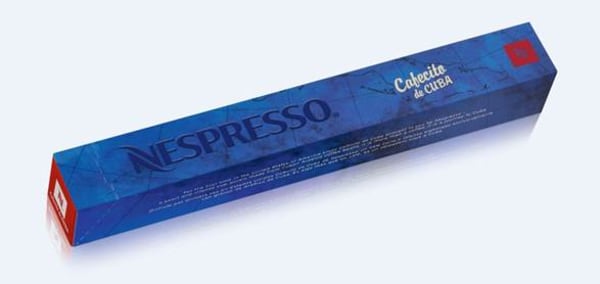
Marketing the Mystique of Cuba

Coffee lovers can now try "the first Cuban coffee in the U.S. in over 50 years" (quoting a Nespresso ad). In limited supply at Nespresso stores, and priced higher than other Nespresso capsules, Cafecito de Cuba offers a "taste" of the island nation, given very recent changes in trade relations.

Cuba has a mystique: It captivated the American imagination during the mid-20th century--the vibrant night life, the music, the celebrities, the food, the heritage. By now, Cuba has been off limits for so many years that it is somewhat mysterious, and its island location has considerable vacation appeal.

Currently, trade restrictions are slowly being eased (significant barriers remain), and Cuban rum and cigars are being allowed into the US.

More and more businesses are using the mystique of Cuba to market goods and services.
  • American Airlines has an ambitious schedule of flights to various cities in Cuba, seeing future profit potential as tourism expands little by little. Jet Blue and Silver are also flying to Cuba.
  • Starwood has three hotels under its umbrella, again awaiting the influx of tourists.
  • Chanel brought a fashion show to Cuba, taking advantage of the mystique and novelty.
  • Carnival has cruises to Cuba and New Orleans is trying to establish its port as another point of departure for Cuban tourism.

Friday, October 7, 2016

Retailers Choose: Open or Closed on Thanksgiving?

Retailers are again navigating the pros and cons of whether to open or close on Thanksgiving. From a consumer behavior standpoint, some shoppers like to get an early jump on holiday shopping and Black Friday bargains. Others want an activity in addition to or instead of a big Thanksgiving meal. That's why the Los Angeles Auto Show is open on Thanksgiving, and it usually draws a good crowd.

Mall of America has already announced it will be closed on Thanksgiving, although individual stores may choose to open for all or part of the day. Costco is traditionally closed on Thanksgiving, Nordstrom will be closed, and Staples has announced it will be closed. Some major retailers will reportedly be open, as the list here shows.

On Thanksgiving Thursday and Black Friday 2015, the outdoor retailer REI famously chose to be closed and urged everybody to enjoy the outdoors instead of shopping. Its marketing campaign #OptOutside won awards and lots of publicity. Will REI repeat its decision in 2016? Expect an announcement soon.

Tuesday, October 4, 2016

Target Opens Targeted Stores

Target has long targeted college students and their parents with special events, social media content and products specifically for dorm life. Above, the retailer invited YouTube personalities to live in custom-designed dorm rooms featuring Target's home goods. Target has also sponsored buses to bring students to Target stores for shopping and social events. This year, it tested a chat-bot initiative with Kik, the messaging app.

Now the retailer has begun opening smaller Target stores near college campuses, stocked with the goods that students need and buy. It opened one such store two years ago near the University of Minnesota campus at Dinkytown, an experiment that has encouraged the retailer to open more units like it.

'A lot of college campuses have underdeveloped retail, so the students as well as the people who live around campus don’t have a lot of options to shop for a quick trip', explains a Target exec. Target's marketing strategy envisions hundreds of these small-format stores near campuses, a way to appeal to younger buyers and encourage brand loyalty after they graduate. Will these college-targeted Targets hit the bulls' eye?

Tuesday, September 27, 2016

McDonald's and Content Marketing

In 2016, McDonald's is serving up a lot of marketing content worldwide--at least 5,000 items of content, as estimated by the company. It's active in all the usual media (broadcast, print, etc.) and across the range of social media (FB, Twitter, Snapchat, Pinterest, etc).

McD's chief marketing officer observes: "Defining marketing by these channel-based labels is actually absurd in today's world." Having a consistent voice and message is challenging but critical in this marketing environment.

So is speed, which is why McDonald's has cut the number of meetings with its agencies and streamlined the process to, well, bring content to market faster. In the words of another McD's exec, "it’s no longer the big that eat the small, it is the fast that eat the slow."

Above, an example of how McDonald's Canada is using online content to support the launch of a new McWrap product. If you want to watch the video, be prepared for four hours of food preparation, a bit like watching a McWrap food channel. Actually, the video includes images captured for other content (such as commercials) and it became newsworthy because of its unusual length.

Friday, September 23, 2016

In the Autumn Marketing Plan: Pumpkin Everything

Marketers are implementing the autumn schedule of their marketing plans, which means it's time for pumpkin everything.

Starbucks has a lot to do with the pumpkin takeover every autumn: It introduced a seasonal Pumpkin Spice Latte back in 2003, kicking off a mainstream marketing tidal wave that has been felt around the world. It even has its own Twitter feed (114k followers)!

Other marketers incorporated pumpkin flavors earlier (such as Pumpkinhead Ale from Maine's Shipyard Brewing Company), but given the pop-culture status of Starbucks, its marketing is most likely what gave pumpkin spice a high profile in autumn.

Here's the thinking: Seasonal/limited time variations of products generate excitement and bring customers back for a taste and then for repeat purchases. Plus pumpkin builds buzz.

Of course food and beverage marketers have embraced pumpkin flavors, but so have hair salons.
When is pumpkin everything enough? Or too much?