In June, 2006, I posted about the different strategies and market forecasts of Airbus vs. Boeing.
Airbus thought passengers would be flying hub to hub in giant jets like the A380. Boeing thought passengers would be flying point to point in smaller jets.
Now, more than 12 years later, Airbus has decided to discontinue its super-jumbo A380. Orders had been dropping off . . . and now Airbus will remove the 380 from its product line.
It turned out, Boeing's vision of how passengers would prefer to travel, coupled with tech advances in jet fuel economy and airline decisions, made a big difference in marketing new commercial jets.
Friday, February 15, 2019

Thursday, November 1, 2018
Marketing Plan Resources
Thanks for visiting.
If you're formulating a marketing plan, take a peek at the sample plan posted on the website for my U.S. textbook. It will give you an idea of how to organize a marketing plan and the kind of content included.
You can also browse the glossary of key terms on the same website.
For a listing of links to marketing plan resources all over the web, see here. You'll find news sites, marketing data sites, and many other useful sources of statistics and updated info about companies and concepts.
And finally, if you're looking for my perspective on whether competitors are stakeholders, here's one of many posts on the subject. Yes, competitors are stakeholders, in my view!
If you're formulating a marketing plan, take a peek at the sample plan posted on the website for my U.S. textbook. It will give you an idea of how to organize a marketing plan and the kind of content included.
You can also browse the glossary of key terms on the same website.
For a listing of links to marketing plan resources all over the web, see here. You'll find news sites, marketing data sites, and many other useful sources of statistics and updated info about companies and concepts.
And finally, if you're looking for my perspective on whether competitors are stakeholders, here's one of many posts on the subject. Yes, competitors are stakeholders, in my view!
Wednesday, October 24, 2018
Marketers Market for Halloween
Yes, "holiday creep" has Halloween candy/costumes in stores even before back-to-school marketing begins. But marketing trends go well beyond these basics.
No matter what you're marketing, be aware that if you're using Halloween themes in email marketing, you may have fewer folks open your messages. Yet the conversion rate is solid, meaning those who open messages can be converted into buyers.
Some marketers prefer to intro or preview Halloween goods and services early, little by little, to build anticipation and awareness. This is certainly the case for theme parks and other service marketers that offer special Halloween experiences.
Seasonal products or campaigns related to Halloween need time to reach audiences and generate response. The soft-drink brand Fanta rolled out Halloween-themed Snap filters early to encourage usage and viral reaction.
Halloween and pumpkins are a traditional association. Pumpkin food products are selling well as the fall season gets into full swing before Halloween. As usual, marketers are pushing pumpkin spice everything. In fact, Starbucks and Dunkin' began marketing pumpkin flavors in August this year. But, despite rumors, there is NO Oscar Meyer pumpkin-flavor bologna.
No matter what you're marketing, be aware that if you're using Halloween themes in email marketing, you may have fewer folks open your messages. Yet the conversion rate is solid, meaning those who open messages can be converted into buyers.
Some marketers prefer to intro or preview Halloween goods and services early, little by little, to build anticipation and awareness. This is certainly the case for theme parks and other service marketers that offer special Halloween experiences.
Seasonal products or campaigns related to Halloween need time to reach audiences and generate response. The soft-drink brand Fanta rolled out Halloween-themed Snap filters early to encourage usage and viral reaction.
Halloween and pumpkins are a traditional association. Pumpkin food products are selling well as the fall season gets into full swing before Halloween. As usual, marketers are pushing pumpkin spice everything. In fact, Starbucks and Dunkin' began marketing pumpkin flavors in August this year. But, despite rumors, there is NO Oscar Meyer pumpkin-flavor bologna.
Monday, October 15, 2018
Should You Collaborate with Competitors?

What's been changing, in recent years, is the trend toward actively collaborating with competitors for mutual benefit. This does not mean setting prices together, which is illegal. It does mean looking for specific areas where collaboration would be advantageous for two competitors (or perhaps the entire industry).
For example, what about sharing resources with a competitor to give each something unique to market? Read how a brewer came up with a novel idea and recruited competitors to work together.
Advertising agencies are working together, in some cases, to win and service clients. Maybe an agency sees a competitor with a particular focus that can add value for part of a big project. Or maybe an agency wants to bolster its bid for work by combining forces with a specialized agency.
Are there situations when collaboration can help you be a more effective marketer?
Monday, October 1, 2018
8 Sources of Info about Specialized Marketing Topics
Looking for info about specialized marketing topics? Here are 8 good sources to keep you updated:
- Automotive marketing - weekly news from MediaPost
- Social media marketing - news from Social Media Today
- Sports marketing - news from The Drum
- Mobile marketing - news from Marketing Land
- Digital marketing - news from Advertising Age
- Retail marketing - news from Retail Dive
- Content marketing - news from Direct Marketing News
- Online marketing - news from Entrepreneur
Monday, September 24, 2018
Growth of the Experience Economy
"The experience economy" is a 20-year-old phrase that refers to a premium, differentiated experience perceived as higher value (by consumers) than, say, service delivery or products alone.
According to the classic Harvard Business Review article about this phenomenon, marketers can "wrap experiences" around traditional goods or services (or both) to enhance the offering. The key benefit of experiences is that they are memorable.
The consulting firm McKinsey notes that spending on experiences has increased much faster than spending on goods. And, McKinsey says, millennials are leading the way in spending on entertainment and fitness-related experiences, for instance. Think about the rise of experience-heavy offerings like the Museum of Ice Cream, which began as a pop-up retail experience in New York City and has sparked spinoffs, extensions, collaborations, and sponsorships.
Growth in the experience economy is a global phenomenon. A cultural event space in Manchester, England, found strong demand for its diverse experience offerings, from theater to music to art and food. "The big change to what I call experientialism is more about finding happiness and status in experiences instead," says author and trendspotter James Wallman.
Does this mean materialism is dead? The lesson from the experience economy is that goods alone may not be the best or only way to satisfy a consumer need, especially for key consumer groups.
According to the classic Harvard Business Review article about this phenomenon, marketers can "wrap experiences" around traditional goods or services (or both) to enhance the offering. The key benefit of experiences is that they are memorable.
The consulting firm McKinsey notes that spending on experiences has increased much faster than spending on goods. And, McKinsey says, millennials are leading the way in spending on entertainment and fitness-related experiences, for instance. Think about the rise of experience-heavy offerings like the Museum of Ice Cream, which began as a pop-up retail experience in New York City and has sparked spinoffs, extensions, collaborations, and sponsorships.
Growth in the experience economy is a global phenomenon. A cultural event space in Manchester, England, found strong demand for its diverse experience offerings, from theater to music to art and food. "The big change to what I call experientialism is more about finding happiness and status in experiences instead," says author and trendspotter James Wallman.
Does this mean materialism is dead? The lesson from the experience economy is that goods alone may not be the best or only way to satisfy a consumer need, especially for key consumer groups.
Tuesday, September 18, 2018
Dr Pepper Targets College-Age Consumers
MARKETING DR PEPPER
More than a century old, Dr Pepper (now merged with Keurig) aims to make itself the soft drink brand of choice for college-age consumers. This market segment tends to be interested in diverse flavors and differentiation, as well as being heavy consumers of soft drinks.No wonder Dr Pepper is a big sponsor of college football, and is very active on social media (420k Twitter followers, 539k Instagram followers, 14mm Facebook likes, 26k YouTube subscribers). And no wonder the company promotes "pick your Pepper" limited-time designs to catch the eye of variety seekers.
This year, Dr Pepper is trying something new with a soap opera-like series of commercials/episodes that will tell stories coming to an end as the college football season is over in January, 2019. The integrated campaign includes social media plus traditional media to attract attention and increase interest in the story line.
Tuesday, September 4, 2018
What Is the Most Popular Color for Logos?

Here's a hint: At left, the retailer Uniqlo's bold logo. In a sea of mall stores or downtown storefronts, the logo is designed to stand out. Think of Target's red-and-white bull's-eye logo, easily identifiable from the far distance of a highway or across a crowded city street. Or look at Macy's red star, a simple and quick identifier. That's why the most popular color for retailer logos is red.
For companies in the fields of marketing, public relations, healthcare, and technology, blue tends to be the most popular color, according to the study, because of associations with "knowledge, tranquility, security, and trust."
The Cigna Health Insurance logo is mainly blue. So is the logo of Anthem. So is Progressive. And Geico (yes, the gecko is green, but the logo is blue).
Next time you see a retailer's or company's logo, think about why it chose its color(s) and how color contributes to positive marketing associations.
Thursday, August 23, 2018
Ad Blockers Gain Mobile Ground
SEEING ADS?
Recognizing that consumers want alternatives, Verizon, for instance, has ad-blocking capabilities for mobile users on its new Wi-Fi service.
Similarly, Google's Chrome desktop and mobile browsers have an add-in feature to block ads that repeatedly violate the Better Ads policies.
Microsoft tested the use of AdBlock Plus (a popular add-in blocker) for its Edge browser used on Android mobile devices. Now it has adopted the blocker as part of the Edge browser.
The new browser Brave also includes ad-blocking capabilities, both for mobile and desktop users. In fact, Brave blocks ads by default--which means consumers must opt into any digital tracking if they wish. In the past, the usual situation was "opt out," meaning consumers would be tracked unless they specifically asked not to be tracked.
The trend toward ad blockers affects many advertisers and publishers. Fewer eyeballs translate into lower revenue...and the possibility that, in the future, more websites will request or require payment. One of the pioneers of a paywall was the Wall Street Journal, which has been charging for print and online access (mobile or not) for two decades. Will more consumers be willing to pay for known quality and trusted sites?
Wednesday, August 15, 2018
Vanilla Shortage Is Back on the Menu
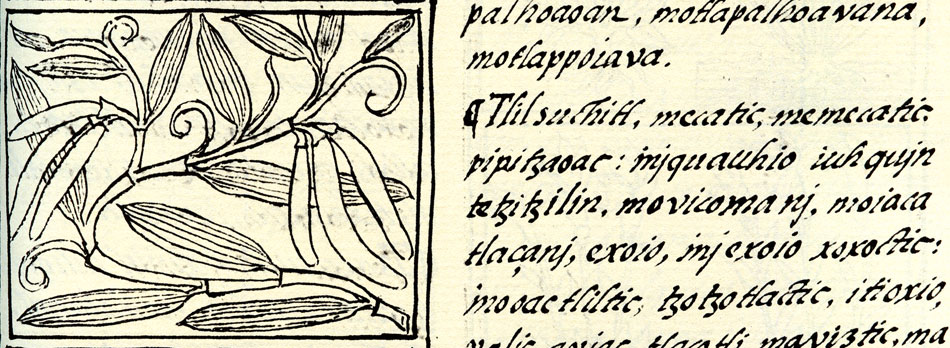 |
| https://en.wikipedia.org/wiki/Vanilla#/media/File:Vanilla_florentine_codex.jpg |
Now, the shortage is back, due to poor crop harvests in Madagascar, where much of the world's vanilla is grown. Although the shortage is not as bad as originally feared, it is causing headaches for marketers that must use vanilla in their recipes. "Eighty per cent of the market is industrial vanilla, and that's what drives the pricing," says a senior exec of one vanilla import firm. In other words, consumers aren't the big buyers--businesses are the big buyers of this key ingredient.
As a result of the shortage, some businesses are raising prices to cover the higher cost of buying vanilla. Ice cream marketers are cautiously increasing prices, for instance. Others are seeking out alternatives, such as "vanilla flavor" rather than "vanilla extract." Watch for more research on vanilla as the world copes with periodic shortages that affect the marketing plans of food businesses, perfume businesses, and others that rely on this key ingredient.