Decades ago, shoppers awaited the Thursday newspaper to clip coupons for Saturday's grocery shopping. In 1978, the dollar value of coupons issued exceeded $72 billion, and continued to rise year after year due to competition and shopper expectations.
Fast-forward to the great recession, when super coupon clippers became media stars and taught mainstream shoppers some tricks to save big. By 2013, an estimated 315 billion coupons were being issued in the United States...with less time between issuance and redemption deadline. Marketers clearly wanted to increase the sense of urgency and encourage consumers to buy now. Yet fewer Americans said they redeem coupons, mainly because they weren't able to find coupons for the products they prefer to buy.
Today, savvy shoppers looking for bargains appear to be in favor of mobile coupons, accessed via smartphone or tablet computer. Waiting in line in local stores, I often see cashiers scanning coupon codes on a customer's phone. With a click, not a clip, shoppers save money and stores avoid the hassle of bundling paper coupons for return to manufacturer. Fast, easy, and no more little pieces of paper to handle.
Yet another approach is card-linked couponing, which involves consumers registering their payment cards with the couponing service so that discounts are automatically applied after the shopping transaction. This couponing method streamlines the entire process for buyers and sellers. Just as important, it allows marketers to evaluate the results of every coupon offer and analyze who's buying, when, where, and how often.
Marketing analysis, opinion, and links by Marian Burk Wood, author of Pearson Education's "The Marketing Plan Handbook."
Showing posts with label discounting. Show all posts
Friday, May 2, 2014
Monday, November 19, 2012
Happy 50th to Target, Walmart, and Kmart
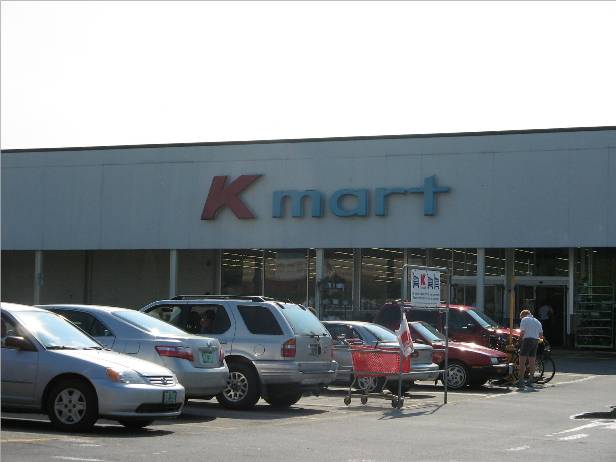
Way back in 1962, three discount chains opened their first stores. Today, Walmart, Target, and Kmart are well known for their suburban discount stores filled with aisles and aisles of low-priced merchandise. Over time, this high-volume, low-price approach to retailing would reshape the entire industry and do a lot to reset consumers' expectations and buying patterns.
Target, a discount chain founded by the owners of Dayton's department store, opened its first store in the company's home state of Minnesota in 1962.
Why "Target" with a bulls' eye? "As a marksman's goal is to hit the center bulls-eye, the new store would do much the same in terms of retail goods, services, commitment to the community, price, value and overall experience," management explained. By 2000, the discount side had become so successful that the company was renamed Target.
Kmart was the brainchild of management at S.S. Kresge, a five-and-dime retailer. Eyeing the rise of discounting (and the changes that would ultimately doom five-and-dime stores), the company opened its first Kmart in Michigan in 1962.
Within four years, Kresge was operating 162 discount stores...and by 1977, the majority of the firm's revenues were coming from discounting, which is why the name was officially changed to Kmart in that year.
Sam Walton brought discount retailing to Arkansas in 1962 when he opened his first Wal-Mart store.
Five years later, the company had 24 stores and was growing rapidly.
Today, Walmart (no hyphen in the name any more) is the world's largest retailer and as controversial as it is innovative.
Will discount stores survive the Internet age? Or will they morph into showrooms where shoppers can examine merchandise and then click to buy online?
Target, a discount chain founded by the owners of Dayton's department store, opened its first store in the company's home state of Minnesota in 1962.
Why "Target" with a bulls' eye? "As a marksman's goal is to hit the center bulls-eye, the new store would do much the same in terms of retail goods, services, commitment to the community, price, value and overall experience," management explained. By 2000, the discount side had become so successful that the company was renamed Target.
Kmart was the brainchild of management at S.S. Kresge, a five-and-dime retailer. Eyeing the rise of discounting (and the changes that would ultimately doom five-and-dime stores), the company opened its first Kmart in Michigan in 1962.
Within four years, Kresge was operating 162 discount stores...and by 1977, the majority of the firm's revenues were coming from discounting, which is why the name was officially changed to Kmart in that year.
Sam Walton brought discount retailing to Arkansas in 1962 when he opened his first Wal-Mart store.
Five years later, the company had 24 stores and was growing rapidly.
Today, Walmart (no hyphen in the name any more) is the world's largest retailer and as controversial as it is innovative.
Will discount stores survive the Internet age? Or will they morph into showrooms where shoppers can examine merchandise and then click to buy online?
Friday, October 28, 2011
2011: Another Cut-Price Christmas?
Halloween hasn't arrived yet and already retailers are positioning themselves with discounts and promotions to capture share of wallet well in advance of the holiday buying season. Penny-pinching purchasers do care about price, but how much influence will the following policies have on actual buying?
- Toys 'R' Us is launching a new version of its customer loyalty program, featuring discounts and money-back after the season. The program has 24 million members and will doubtless attract millions more who will consolidate their purchases to achieve savings.
- Walmart has a price-match guarantee to reassure shoppers that they won't find a lower price anywhere from Nov. 1 to Dec. 25. If they do, Walmart will give them a gift card for the difference in price--bringing shoppers back into the store to spend again.
- Sears will beat a competing price by 10%, subject to the fine print of course.
- Bed, Bath & Beyond will match Amazon.com's prices, which is unusual because very few in-store retailers include online merchants in price match programs.
Monday, August 18, 2008
Allow Discounts or Maintain Minimum Pricing?
Today's WSJ has an excellent article about the tug-of-war between manufacturers and retailers over pricing. Some brands want to cut off retailers that do not stick to a minimum MSRP. Some retailers complain that this is price fixing.
A 2007 Supreme Court ruling said that manufacturers' price restraints should be evaluated case by case. Meanwhile, some state AGs are urging Congress to make "resale price maintenance" illegal.
The battle is not just in the courts--consumers are in a great position to influence the outcome by voting with their wallets.
A 2007 Supreme Court ruling said that manufacturers' price restraints should be evaluated case by case. Meanwhile, some state AGs are urging Congress to make "resale price maintenance" illegal.
The battle is not just in the courts--consumers are in a great position to influence the outcome by voting with their wallets.