Domino's, which built its rep on convenient, speedy delivery, wants to make it really easy to order pizza--applying what it knows about consumer behavior. Above, the "zero click" app that will order your favorite pizza (or whatever you like from the menu) with no clicks. Mobile-led marketing that works. Domino's revenues and profits are up.
Want to order one of its pizzas via emoji? You can do that by tweeting the emoji to Domino's. (The pizza giant is very social, with more than 1 million followers on Twitter, 17 million Facebook likes, and 1 million Instagram followers.) Soon, AI tech will enable online voice ordering a la virtual assistant (think "Alexa" for instance), no clicks needed.
For all the focus on mobile-led marketing, Domino's also has its eye on the in-person customer experience. It's been rolling out new store designs where customers can watch their pizzas being made (seeing it made fresh adds to the experience) and eat in rather than taking out.
Marketing analysis, opinion, and links by Marian Burk Wood, author of Pearson Education's "The Marketing Plan Handbook."
Showing posts with label Domino's. Show all posts
Thursday, March 16, 2017
Monday, September 12, 2016
Next Distribution Frontier: Drones
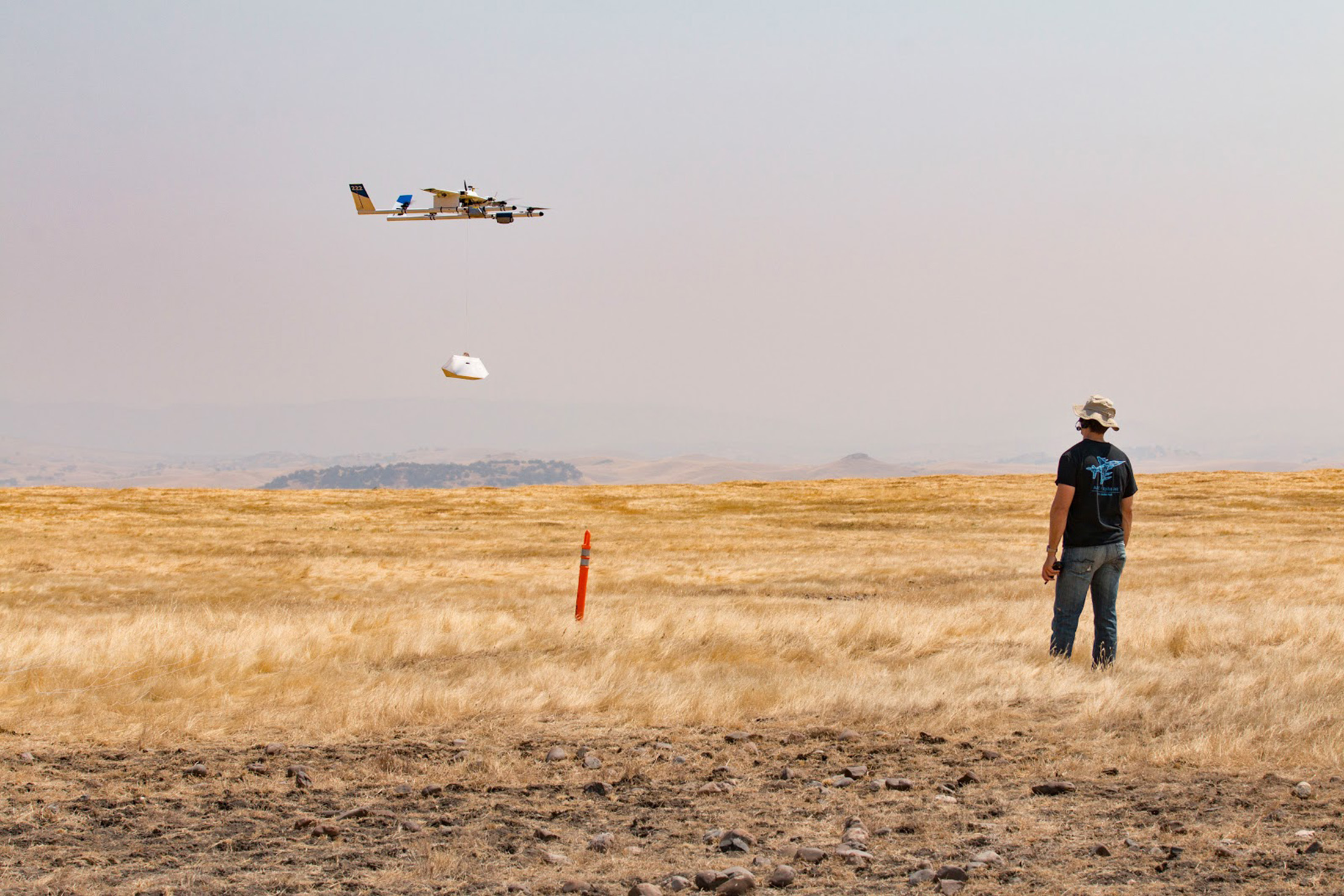
The idea of delivering orders via drone is catching on. Why? Because marketers see a lot of opportunity in same-day delivery, and drones can take a load off traditional mechanisms like trucks/vans/cars/motorcycles. The cost per package delivered is still being assessed, but likely it would be greener, cheaper, and much faster than delivery by traditional methods.
Domino's is already testing drone delivery of pizza in Auckland, New Zealand. 7-Eleven is also testing drone delivery, having successfully delivered Slurpees and food to a family in Reno this year.
Amazon has been championing this possibility for a while and conducting tests. It says: "Amazon Prime Air is a future service that will deliver packages up to
five pounds in 30 minutes or less using small drones. Flying under 400
feet and weighing less than 55 pounds, Prime Air vehicles will take
advantage of sophisticated “sense and avoid” technology, as well as a
high degree of automation, to safely operate beyond the line of sight to
distances of 10 miles or more."
Now Alphabet, Google's parent company, has been approved to test its drone delivery in selected areas. Project Wing, Alphabet's drone unit, is partnering with Chipotle to test delivery of burritos to customers on the Virginia Tech campus. The head of Project Wing observes: "It's the first time that we're actually out there delivering stuff to people who want that stuff." The test will determine how well packaging protects the "stuff" and whether the "stuff" arrives warm.
Domino's is already testing drone delivery of pizza in Auckland, New Zealand. 7-Eleven is also testing drone delivery, having successfully delivered Slurpees and food to a family in Reno this year.
Now Alphabet, Google's parent company, has been approved to test its drone delivery in selected areas. Project Wing, Alphabet's drone unit, is partnering with Chipotle to test delivery of burritos to customers on the Virginia Tech campus. The head of Project Wing observes: "It's the first time that we're actually out there delivering stuff to people who want that stuff." The test will determine how well packaging protects the "stuff" and whether the "stuff" arrives warm.
Wednesday, November 28, 2012
Marketing Movie Rentals: Risk and Reward
With 35,000 bright red kiosks (not to mention 5 million Facebook likes), Redbox virtually rules America's on-the-spot DVD rental business now that Blockbuster has closed its US stores.
Redbox also has a deal with Verizon to offer monthly subscription access to streaming movies. Redbox CEO Paul Davis hints to Fast Company that curated content will be its point of differentiation: "I think there's a point where as consumers, I mean, do you really need 100,000 titles? I mean, really?"
Of course, market dynamics change day to day. When the NPD Group compiled the chart at right, just a few months ago, physical DVD rentals still dominated the market overall. The implication: Redbox should keep plugging in those free-standing kiosks wherever they can. Costly, but convenient for customers.
However, in a survey by ConsumerReports.org conducted a few weeks later, streaming was named the rental method of choice by most respondents, followed by DVD rental and then video-on-demand (VOD). Redbox's Verizon alliance would be critical in this situation.
Disney has tried and failed to gain traction in the streaming segment, one example of the risk in this hotbed of activity.
Netflix has been steadily building a massive library of DVDs and streaming movie content, following the CEO's long-term strategy of "grow membership, increase content, repeat." In other words, Netflix's direction conflicts with the Redbox idea about reaching a point where buyers simply have too many choices. Plus, Netflix lets buyers subscribe to streaming-only content or DVDs-by-mail, as they prefer--at least for now.
Amazon's latest test of monthly pricing for streaming movie content brings the price in line with Netflix's streaming-only subscription price and with Hulu's price. YouTube is testing on-demand rentals (streamed of course). The market is also seeing some experiments like the UK Domino's Pizza/Lionsgate movie rental streaming option being offered to buyers who order pizza.
Where is the market going? Which strategies will pay off? Tune in tomorrow.
Redbox also has a deal with Verizon to offer monthly subscription access to streaming movies. Redbox CEO Paul Davis hints to Fast Company that curated content will be its point of differentiation: "I think there's a point where as consumers, I mean, do you really need 100,000 titles? I mean, really?"
Of course, market dynamics change day to day. When the NPD Group compiled the chart at right, just a few months ago, physical DVD rentals still dominated the market overall. The implication: Redbox should keep plugging in those free-standing kiosks wherever they can. Costly, but convenient for customers.
However, in a survey by ConsumerReports.org conducted a few weeks later, streaming was named the rental method of choice by most respondents, followed by DVD rental and then video-on-demand (VOD). Redbox's Verizon alliance would be critical in this situation.
Disney has tried and failed to gain traction in the streaming segment, one example of the risk in this hotbed of activity.
Netflix has been steadily building a massive library of DVDs and streaming movie content, following the CEO's long-term strategy of "grow membership, increase content, repeat." In other words, Netflix's direction conflicts with the Redbox idea about reaching a point where buyers simply have too many choices. Plus, Netflix lets buyers subscribe to streaming-only content or DVDs-by-mail, as they prefer--at least for now.
Amazon's latest test of monthly pricing for streaming movie content brings the price in line with Netflix's streaming-only subscription price and with Hulu's price. YouTube is testing on-demand rentals (streamed of course). The market is also seeing some experiments like the UK Domino's Pizza/Lionsgate movie rental streaming option being offered to buyers who order pizza.
Where is the market going? Which strategies will pay off? Tune in tomorrow.
Labels:
Amazon,
Disney,
Domino's,
DVD rental,
Hulu,
movie rentals,
Netflix,
Redbox,
YouTube
Thursday, May 19, 2011
Domino's: Honesty IS the Best Policy
Click to the Domino's Web site these days, and you're likely to see a headline like the one I saw the other day: "You asked for better chicken, and we delivered."
Owning up to its shortcomings--and responding, in a very high-profile campaign--has helped Domino's boost sales and profits during the past 18 months.
There was a lot of buzz when Domino's announced via its ad campaign in 2010 that it was tweaking its products due to harsh customer comments such as "tastes like cardboard." The move was gutsy and risky. In fact, the company went a step further and began posting videos and photos of its Pizza Turnaround program, reinventing its pizza "from the crust up."
Honesty paid off: Domino's began seeing significant increases in revenues and share, a trend that continues to this day. And the company is involving customers in the message as well. It invites customers to post Facebook photos and videos of food they've ordered from the company, showing how it looked when delivered. The idea is to demonstrate that what you see in a Domino's ad is what you'll get in the box when you order.
I like the way the Domino's blog reinforces the "you asked for it, you got it" theme as well as announcing new products and special offers. Honesty is the best policy!
Owning up to its shortcomings--and responding, in a very high-profile campaign--has helped Domino's boost sales and profits during the past 18 months.
There was a lot of buzz when Domino's announced via its ad campaign in 2010 that it was tweaking its products due to harsh customer comments such as "tastes like cardboard." The move was gutsy and risky. In fact, the company went a step further and began posting videos and photos of its Pizza Turnaround program, reinventing its pizza "from the crust up."
Honesty paid off: Domino's began seeing significant increases in revenues and share, a trend that continues to this day. And the company is involving customers in the message as well. It invites customers to post Facebook photos and videos of food they've ordered from the company, showing how it looked when delivered. The idea is to demonstrate that what you see in a Domino's ad is what you'll get in the box when you order.
I like the way the Domino's blog reinforces the "you asked for it, you got it" theme as well as announcing new products and special offers. Honesty is the best policy!
Thursday, September 30, 2010
Domino's Pizza, Anyone?
Since Domino's released its iPhone app, pizza orders in the UK and elsewhere have soared. In Australia, the app is creating buzz and increasing online orders.
In the US, Domino's is actively using social media to involve customers and encourage ordering. Its Twitter account has more than 15,000 followers.
Its FB page invites customers to snap a photo of a Domino's pizza and receive $500 if the photo is chosen as one of 8 winners.
In fact, after a customer submitted a photo of a mashed pizza he had received, Domino's responded by using the photo in an "apology" commercial and replaced the pizza in very public fashion. The apology campaign has carried over into social media, as well. In short, Domino's is using technology and humility to reach its target audience, polish its image, and beat competitors.
In the US, Domino's is actively using social media to involve customers and encourage ordering. Its Twitter account has more than 15,000 followers.
Its FB page invites customers to snap a photo of a Domino's pizza and receive $500 if the photo is chosen as one of 8 winners.
In fact, after a customer submitted a photo of a mashed pizza he had received, Domino's responded by using the photo in an "apology" commercial and replaced the pizza in very public fashion. The apology campaign has carried over into social media, as well. In short, Domino's is using technology and humility to reach its target audience, polish its image, and beat competitors.