The Ugly Christmas Sweater craze is far from over. It's gone from a grassroots movement to mainstream marketing, as shown above in an Instagram post by Madame Tussauds. Here, the aim was to promote a fundraiser, Save the Children's Christmas Jumper Day (the British "jumper" translates as "sweater" for Americans). Note the over-the-top couples sweater worn by the wax versions of Prince William and his beautiful bride Kate.
Now a holiday tradition, ugly Christmas sweaters are everywhere. Making waves in Vermont, serving as the theme for pub crawls and beer tastings in Chicago, making fundraising fun through celeb-designed sweaters (see sweater at right, by Shaquille O'Neal).
One enterprising company invites customers to "design your own" ugly sweater. Click to Ugly Christmas Sweater and see for yourself.
There are a LOT of really interesting, really ugly sweaters out there. Pop culture influences customer behavior and gets woven into the fabric of marketing! Pun intended.
Marketing analysis, opinion, and links by Marian Burk Wood, author of Pearson Education's "The Marketing Plan Handbook."
Showing posts with label nonprofit marketing. Show all posts
Saturday, December 10, 2016
Thursday, July 14, 2016
Marketing With Pokemon Go
The Pokemon Go phenomenon might be a summertime spike or something more lasting, but while it's popular, marketers are jumping on the bandwagon.
Pokemon Go is a new smartphone game based on the old Pokemon characters, with the special twist that players wander in the real world looking to "capture" characters in various locations. Here's what the Pokemon website says about the game:
Nonprofits are also part of this craze. From nature preserves to museums and beyond, organizations are taking the opportunity to invite visitors to catch Pokemon characters with them. Although not all places are happy about being involved without first being asked, some nonprofits are suggesting that advocates organize Pokemon Go walking tours to raise money for charity.
Go Pokemon Go!
Pokemon Go is a new smartphone game based on the old Pokemon characters, with the special twist that players wander in the real world looking to "capture" characters in various locations. Here's what the Pokemon website says about the game:
Get on your feet and step outside to find and catch wild Pokémon. Explore cities and towns around where you live and even around the globe to capture as many Pokémon as you can. As you move around, your smartphone will vibrate to let you know you're near a Pokémon. Once you've encountered a Pokémon, take aim on your smartphone's touch screen and throw a Poké Ball to catch it. Be careful when you try to catch it, or it might run away! Also look for PokéStops located at interesting places, such as public art installations, historical markers, and monuments, where you can collect more Poké Balls and other items.Local businesses are excited about the number of potential customers coming to their premises in search of wild Pokemon characters. Several restaurants and bars reported super increases in sales after investing about $10 for "lure" packages. Businesses can become "poke stops" to boost the user's stock of balls, attracting foot traffic in the process. It's a matter of harnessing high interest and engagement to shape customer behavior, at least increasing awareness of the brand or location and at best, gaining trial and purchasing.
Nonprofits are also part of this craze. From nature preserves to museums and beyond, organizations are taking the opportunity to invite visitors to catch Pokemon characters with them. Although not all places are happy about being involved without first being asked, some nonprofits are suggesting that advocates organize Pokemon Go walking tours to raise money for charity.
Go Pokemon Go!
Monday, March 7, 2016
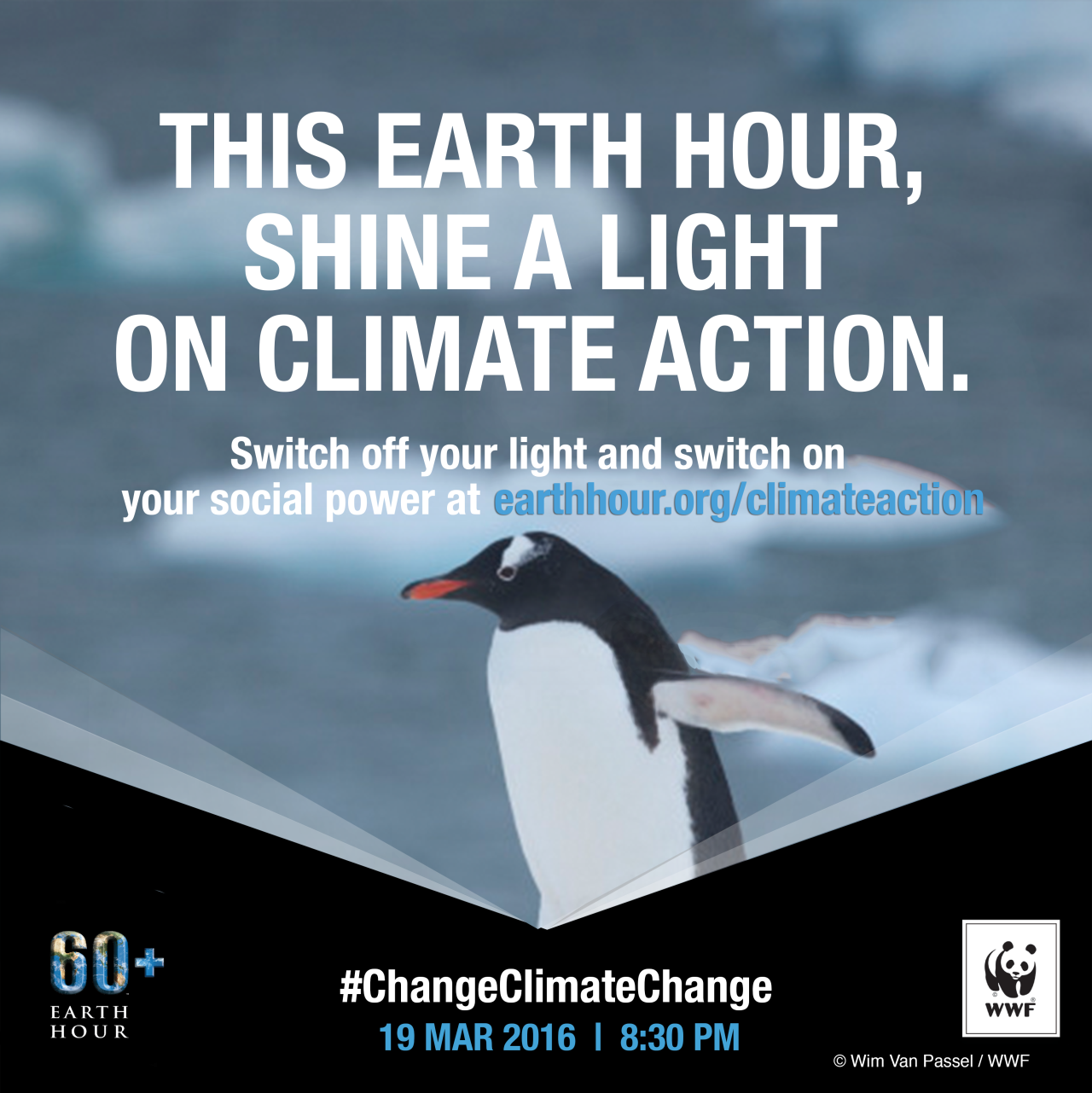
Marketing Earth Hour, March 19
The first Earth Hour was observed in Sydney in 2007. Then, as now, the objective is to focus attention on environmental protection of our planet's precious natural resources.
This year's Earth Hour will be 8:30 pm to 9:30 pm on March 19th. The World Wildlife Fund is marketing Earth Hour through traditional media (such as print magazine ads and YouTube-ready commercials), combined with integrated social media marketing for earned media.
Social media activities include:
This year's Earth Hour will be 8:30 pm to 9:30 pm on March 19th. The World Wildlife Fund is marketing Earth Hour through traditional media (such as print magazine ads and YouTube-ready commercials), combined with integrated social media marketing for earned media.
Social media activities include:
- Tumblr posts with striking images and hashtags ready for sharing, such as #ChangeClimateChange.
- Facebook posts (1 million likes) with hashtags like #WorldWildlife
- Instagram images (30k followers) of flora and fauna and people participating in activities to protect the planet.
- Twitter posts (145k followers) with hashtags like #EarthHour
- Pinterest pins with many of the same colorful images that celebrate natural beauty and inspire participation in Earth Hour
Friday, May 10, 2013
Snail Mail and Social Media Help Find Missing Kids
For National Missing Children’s Month, the nonprofit Missing Children's Network has teamed up with Toronto ad agency Lowe Roche to help Canadians create custom postage stamps featuring missing kids.
The hope is that someone will contact authorities if they recognize a child shown on the stamp.
It all starts at the campaign's website where consumers can browse the photos of missing kids and click to print one on customized stamps. My fingers are crossed that some child, somewhere, will be reunited with his or her family after this campaign kicks off.
The U.S. Postal Service has supported a similar mission by distributing photos of missing children to its employees and partnering with Valassis to deliver promo materials that include photos of missing kids. Nearly 150 children have been recovered thanks to this national snail-mail effort.
Back in 2006, the USPS also issued an Amber Alert stamp to publicize efforts to locate children who have been abducted and return them to their families.
Of course, Amber Alert has its own Facebook page with more than 100,000 likes and updates about the program nationwide and state by state. Check it out!
The hope is that someone will contact authorities if they recognize a child shown on the stamp.
It all starts at the campaign's website where consumers can browse the photos of missing kids and click to print one on customized stamps. My fingers are crossed that some child, somewhere, will be reunited with his or her family after this campaign kicks off.
The U.S. Postal Service has supported a similar mission by distributing photos of missing children to its employees and partnering with Valassis to deliver promo materials that include photos of missing kids. Nearly 150 children have been recovered thanks to this national snail-mail effort.
Back in 2006, the USPS also issued an Amber Alert stamp to publicize efforts to locate children who have been abducted and return them to their families.
Of course, Amber Alert has its own Facebook page with more than 100,000 likes and updates about the program nationwide and state by state. Check it out!
Saturday, May 12, 2012
Stamp Out Hunger Today
Today is the U.S. Postal Service's annual Stamp Out Hunger food drive. Earlier in the week, a postcard in my mailbox alerted me that the drive would take place today, and well-timed local publicity featuring community postal officials and carriers added a neighborhood element to the campaign. My bag of nonperishable food cans and packages is already in front of the mailbox, awaiting pickup.
As of this moment, the campaign's Facebook page has more than 78,000 "likes" and it's using Twitter to spread the word, as well, with #StopDropDonate as the hashtag. A Google search turns up 1.5 million hits for this year's food drive and more than 1 million images.
I hope the drive collects a record amount of food this year!
As of this moment, the campaign's Facebook page has more than 78,000 "likes" and it's using Twitter to spread the word, as well, with #StopDropDonate as the hashtag. A Google search turns up 1.5 million hits for this year's food drive and more than 1 million images.
I hope the drive collects a record amount of food this year!
Tuesday, December 21, 2010
Ask Not What Santa Can Bring You ...
Ask how you can help Santa bring something to others! In this season of giving, worthy causes are hoping for a last-minute contribution OR at least a piece of your gift-giving budget (if you buy gifts from people/organizations linked to worthy causes).
One year I "gave" beehives through Heifer International; another year I helped rebuild New Orleans through donations to Habitat for Humanity. This year and last, I helped small-scale entrepreneurs through microloans via Kiva.
Many worthy causes are competing for us to play Santa through them. Nicholas Kristof of the New York Times suggests some that aren't well known but deserve consideration on your nonprofit donation list. Time magazine discusses a few that have good track records for putting donations to use.
Not sure which nonprofit to choose for your donations? Charity Navigator, among other sites, will help you figure out who does what and how efficiently the organizations use your money.
You still have a few more days to play Santa. What are you waiting for?
One year I "gave" beehives through Heifer International; another year I helped rebuild New Orleans through donations to Habitat for Humanity. This year and last, I helped small-scale entrepreneurs through microloans via Kiva.
Many worthy causes are competing for us to play Santa through them. Nicholas Kristof of the New York Times suggests some that aren't well known but deserve consideration on your nonprofit donation list. Time magazine discusses a few that have good track records for putting donations to use.
Not sure which nonprofit to choose for your donations? Charity Navigator, among other sites, will help you figure out who does what and how efficiently the organizations use your money.
You still have a few more days to play Santa. What are you waiting for?
Friday, May 22, 2009
Firstgiving
Does it work? Well, Firstgiving was the technology behind the 2009 Boston Marathon's fundraising of $1.9 million for nearly 100 charities. Since 2003, Firstgiving has helped 25,476 nonprofits raise more than $96 million. Sounds like a plan.
All kinds of causes are represented on Firstgiving's pages, from the Blue Rudge Rollergirls skating for the Asheville Humane Society to the Law Enforcement Torch Run to benefit Special Olympics Georgia. Browse charities by tag (such as "education") to see the diversity of causes on Firstgiving's site. Bottom line: A touch of good marketing for some very good causes.
Saturday, January 3, 2009
Applying Science to Marketing
The NY Times reports on a new neuromarketing venture to analyze the way people mentally process public service ads.
What a wonderful idea--using neuromarketing to fine-tune PSAs so they capture attention, touch people intellectually and emotionally, and have a better chance of affecting attitudes and behavior.
Watch for new, improved messages, even better than the old standby taglines "This is your brain on drugs" and "Only you can prevent forest fires."
What a wonderful idea--using neuromarketing to fine-tune PSAs so they capture attention, touch people intellectually and emotionally, and have a better chance of affecting attitudes and behavior.
Watch for new, improved messages, even better than the old standby taglines "This is your brain on drugs" and "Only you can prevent forest fires."
|