Showing posts with label Millennials. Show all posts

Friday, July 13, 2018

Payment Trend: Cashless Restaurants

A small but growing number of U.S. restaurants are going cashless--meaning they accept only credit/debit cards or electronic payments such as Apple Pay.

Why? According to restaurant owners interviewed by Visa, the benefits are:

  • Many Millennials prefer cashless transactions
  • Handling cash takes time and costs the restaurant money
  • Transactions are faster, reducing wait times
  • No cash means higher security and lower risk 
Not so very long ago (at least in marketing eras), some restaurants were cash-only, not wanting to pay merchant fees to accept Visa, MasterCard, American Express, and other plastic. Now Visa has actually offered restaurants a cash bonus to go cashless.

One disadvantage to consider is whether cashless restaurants will be unable to serve the market of people who, by choice or by economic situation, are cardless.

On the other hand, the increased popularity of Starbucks Mobile Pay, Apple Pay, Samsung Pay, and other payment apps indicates that there is a definite market of people who prefer mobile transactions.

Monday, October 9, 2017

Marketing to Pet Owners

Pet owners spend an estimated $66 billion+ spent every year on foods, treats, toys, and other goods and services for their pampered pets. Most of that money goes toward pet food, with pet supplies and vet services the next-biggest category of spending within the industry.

It's a ginormous marketing opportunity: More than 60 million US households have a dog, nearly 50 million households have a cat, and 15 million households have fish. Nestle Purina, one of the market leaders, is expanding production and distribution of products like Friskies and Dog Chow, to keep up with higher demand by the growing ranks of pet owners.

http://nulo.com/
Now, as Millennials become a driving force in buying for pets, marketing is more critical than ever. Given this target market's focus on healthy eating, it makes sense that pet-food marketers are emphasizing healthy ingredients like quinoa--yes, quinoa, the grain.

No wonder celebrity chefs like Rachel Ray have their own pet food brands now. And Olympic star Michael Phelps is appearing in ads for Nulo pet food, which promotes its low-carb nutritional benefits.

Nulo, by the way, has more than 141k likes on Facebook, compared with 1.1m likes for Purina Dog Chow on FB. Everyone's going social to connect with this major market.

Tuesday, July 5, 2016

Millennials and Marketing

An online search for "Millennials and marketing" shows more than 22 million results. (If we could have searched online for "Boomers and marketing" 30+ years ago, there would have been a similar result.)

Millennials are the target market for many goods and services, with distinct needs, wants, preferences, attitudes, and behaviors. Stereotyping won't work--research is key. Brands that do their homework and get it right can win loyal customers. Brands that don't listen or respond will fall out of favor and have to run hard to catch up (if they can).

Here are some recent articles and analyses about marketing to Millennials:

Tuesday, May 3, 2016

Thinking About Digital Devices and "Dayparts"

Think with Google just posted a fascinating discussion about "dayparting" and targeting. The main idea is that marketers should analyze "micro-moment" opportunities for communicating with the target market, when and where and how these consumers are accessing data. How--meaning what type of digital device people are using at the time.

This isn't Google's first post about micro-moments. Last year, a post discussed how consumer behavior is shifting and now comprises so many split-second decisions and actions such as checking social media, checking a bank balance or texting a friend. At those moments, consumers may use different digital devices and want different info or products or functionality. Marketers, are you ready?


Pew Research points out (above) that Millennials are almost all tethered to their cell or smartphones--and some simply see no need for certain other digital devices. That's bad news for PC/Mac makers, bad news for marketers of e-book readers, bad news for game console marketers. It's also a wakeup call for marketers that think about websites and social media in terms of the big screen and in terms of one message all the time.

Mapping the dayparts of digital involvement, Google has found that many people use their phones to accomplish things on the way to work and after the work day is over. During business hours, more tablets and computers are used for online searches, compared with the number of searches by phone.

Understanding consumer behavior and micro-moments will help you plan marketing that makes sense for consumers and the digital device they're using at that time, the content they're seeking, and the functionality you should have for big or tiny screens. Is your marketing plan in tune with these micro-moments?

Tuesday, January 19, 2016

More about Marketing to Millennials

So many marketing plans target Millennials that it's worth looking at some recent research about this key market segment.

  • As shown in the Pew Research data at left, Millennials have a very positive view of the role of small businesses in America, and the role of technology firms. Millennials are, like the rest of the nation, not as positive about the upside-impact of national news media.
  • Millennials are using their ever-ready smartphones for all kinds of functions, not just selfies but of course mobile banking as well.
  • Loading prepaid cards with money to spend is another Millennial behavior. 
  • Personality is a big part of the appeal to Millennials when they consider foods and beverages. No big, boring, bland corporate stuff backed by conventional advertising, please.

Monday, December 14, 2015

Why Use Age for Market Segmentation?

In this age of behavioral, attitudinal, and lifestyle segmentation, how important is age as a segmentation variable to identify consumer groups within a market?

Pew Research Center has an excellent analysis, titled "The Whys and Hows of Generations Research," that explains how members of generational cohorts (think "Millennials" and "Baby Boomers") are influenced by the same world events, music, technology, media, product fads, and other elements.

Clearly, the attitudes, actions, needs, and priorities of one generation are typically not the same as members of another generation. Even when multiple generations adopt a particular technology (smart phones or activity trackers), their reasoning and usage will vary by age. So age continues to be a key variable for market segmentation.

Interestingly, Pew found that Millennials don't like to call themselves by that generational name. What Millennials do say about themselves is that they are idealistic. For more on Pew's studies of Millennials, check here.

Tuesday, December 1, 2015

Post-It's Millennial Target Marketing

3M's Post-It Notes have been around for decades. Now 3M Canada has chosen the target market of Millennials on campus for special promotional attention.

This fall, six campuses around Ontario hosted the Post-It Brand Tweet Machine, a vending machine that dispenses--what else?--Post-It samples to students in exchange for tweets featuring the promotional code. Along with free samples, students received a discount coupon for Post-It purchases at the campus book store. (Brand ambassadors gave away samples to students who don't use Twitter.) See Canada Post-It's Twitter account here.

The non-digital portion of the promotion invited students to use real Post-Its to leave notes for fellow students, reinforcing one of the key benefits of the product.

3M has been using social media to reach brand fans in both consumer and industrial segments, as this story about the firm's recent video illustrates.

Monday, September 21, 2015

Marketers Plan to Target Gen Z

GENERATION Z
Generation Z (people born during the period of roughly 1996-2010) is becoming the marketing target du jour. Sunday's New York Times included a long article comparing Gen Z with Millennials and concluding that Gen Z is a distinctly different target market.

The differences go deeper than age. Note that Gen Zers range in age from kindergarten kids to college students, whereas Millennials are just graduating college and the older cohort segments are in their 30s, establishing their careers and their families.

Ad Age points out that Gen Z is the most diverse and multicultural consumer group in American history, and that Gen Zers are planning to make their own success, having grown up during the difficult Great Recession period, not to mention global unrest.

Fast Company observes that Gen Z has entrepreneurial drive and ambition. They saw adults lose jobs during the economic upheaval. They also witnessed the rise of entrepreneurial heroes who can make a difference, locally and globally. Plus they're digital natives, and apps are a natural.

Public Relations Society of America notes that members of Gen Z are realists. They're mobile-savvy and information-hungry. Sharing (info, images, etc) has always been part of their cohort culture.

Direct Marketing mentions the buying power and behavior of Gen Z, including their readiness to spend on food as well as clothes; their Facebook fluency; and their influence on household buying, especially food.

As so many headlines say, "Move over, Millennials." Members of Gen Z have their own wants, needs, hopes, priorities, and patterns that businesses must understand to be effective in marketing to this emerging consumer group.

Tuesday, August 11, 2015

Check the Pew Research Center For Marketing Background

Writing a marketing plan? Be sure to click to the Pew Research Center to see the latest info about trends in population shifts, household formation, consumer behavior, technology attitudes and usage, media consumption, and other aspects of the external marketing environment.
Pew Research Center data and graphics

Every marketer can benefit by exploring the variety of topics researched by this well-known and objective organization. Here are just four examples:
  • Wondering about where Millennials are living now that the recession is over? Pew says more are still at home with their parents--and that has important implications for businesses that sell home furnishings, mortgages, insurance, and other housing-related goods and services. See chart at right for a quick overview of the plateau in independent Millennial households.
  • Targeting Internet users? Remember that 15% of the U.S. population doesn't use the Internet. Pew examines this group here.
  • Reaching out to Hispanic Americans? Pew covers the world of Hispanic media here. This is a good overview of various media and vehicles, audiences, and issues to keep in mind for marketing communications.
  • Is the global middle class really growing? Pew discusses this complex topic here. If you're targeting emerging nations, you'll need to know that despite income increases, most people are still not enjoying a robust middle-class lifestyle.


Friday, August 7, 2015

Arby's Savvy Salute to Jon Stewart

Now that Jon Stewart is signing off as host of The Daily Show, one of his long-time targets--fast-food marketer Arby's--has prepared a clever "thank you" video montage of his insults against its sandwiches.

The one-minute montage (which Arby's aired during a commercial break in The Daily Show) features Stewart making fun of Arby's in all kinds of ways.

It's positive (and self-deprecating) publicity for Arby's and a fun way to make the most of Jon Stewart's witty put-downs to reach an audience that appreciates irony and shuns outright or heavy-handed commercial promotion.

Search for "Arby's Jon Stewart" on Twitter and you'll see many links to Arby's montage, plus lots of comments in appreciation of the good-natured fun. The Arby's ad made the "top 5" of the week as it attracted an ever-larger audience. As Inc. says, you can fight--or you can join in the fun. Arby's chose fun. It hits just the right tone for the audience and the times--just right to light up the social media stratosphere with comments, too.

Saturday, May 2, 2015

"Humanity Is the Killer App"

Brian Solis (author of a new book, What's the Future of Business?) recently made a comment that sounds simple yet has far-reaching implications:
In the age of machines,
humanity is the killer app.

Technology can help any marketer measure awareness, deliver personalized messages, and create user-friendly products. What sets the best marketers apart from the rest is their ability to connect on a human level...Connect via emotions, empathy, personality, and authenticity.

Brands become beloved because they connect with people on a human level. Take Twinkies, for instance. The iconic brand was part of daily life for tens of millions of U.S. boomers and Millennials. It had a high pop-culture profile and played a role in such major movies as WALL-E and Ghostbusters.

When Hostess declared bankruptcy in 2012, social and traditional media alike erupted with genuine consumer distress. People were really sorry to see Twinkies go.

Then when the brand was revived, the resulting hooray was equally emotional.

No amount of razzle-dazzle techno-stuff can substitute for the human connection that is clearly evident between Twinkies and Twinkie-lovers.

Other brands are just as beloved and have a solid place in the hearts of brand fans. And when a brand touches the heart, it stays in the mind and on the shopping list. That's how consumer behavior works.

In the words of Brian Solis: Humanity is the killer app.

Wednesday, February 25, 2015

Marketing to Millennials

M I L L E N N I A L S

NPR's recent segment on marketing to Millennials featured an informal "focus group" of people in their late teens, 20s, and 30s, with a message to marketers: Entertain us, be authentic, and don't push too hard.

An online search for "marketing to Millennials" yields more than 8 million results, and this NPR coverage is one of the more recent hits. Late last year, Inc. posted a guide to Millennials that reminds marketers of this group's global, tech-savvy perspective and behavior.

What an Adweek infographic points out is that Millennials don't want hard sell, they want a friendly approach--and they enjoy advocating for brands they like and admire.

The Guardian (UK) also reminds companies that Millennials are willing and able to cocreate content for brands they like and admire.

Finally, Media Post recommends that marketers dig deep to see individual differences among Millennials, recognize the vital role of shopper marketing in influencing decisions made in the store, and understand when digital marketing can and can't make a difference.

Saturday, September 27, 2014

Campbell's Soup Revamps Marketing Recipe

These are difficult times for Campbell's, which is struggling through lower consumption of canned soups and changes in consumer lifestyles and tastes. The company's traditional condensed soups in red-and-white cans may be iconic, but they also may seem old-fashioned to Millennial buyers who seek spicier flavors and either speedier preparation or fresh, home-made meals.

Those accustomed to microwave meals or add-boiling-water noodle soup may not necessarily be interested in other types of soups. And the growing interest in home-made meals--fueled, in part, by the foodie culture, including food and cooking programs, web sites, blogs, and more--is also eroding sales of canned foods. Yet convenience is an important factor: canned soup is shelf-stable, quick and easy to make on the stove or in the microwave.

The Chunky line of soups target men, in particular, which is why Campbell's has a sponsorship relationship with the NFL. Above, a photo of Richard Sherman of the Seattle Seahawks and his mother, who appear in "Mama's Boy" TV commercials for Chunky soup; among other NFL players and their moms who appear in Chunky commercials are Demarcus Ware of the Dallas Cowboys and Todd Heap of the Baltimore Ravens.

Campbell is introducing hundreds of new products each year to find the most appealing and enduring. It's also diversifying its product portfolio through acquisitions, as part of its marketing plan to reverse weak results.

Meanwhile, Campbell of Canada is updating the look of its heat-and-eat soup labels to stand out on the shelf and communicate contents to busy shoppers. The label redesign was based on eye-tracking research and is intended to "sell from the shelf" as part of the marketing plan.

“The number one objective is breaking through and being very distinct at shelf-level and having the consumer be able to either very quickly find the variety they’re looking for, or discover a new variety,” explains the senior director of marketing.

Monday, May 19, 2014

Marriott's Moxy Strategy

Twenty-something hipsters who want affordable yet stylish hotel digs when they travel are the target market for Marriott's newest chain of hotels, branded Moxy. Opening only in Europe, Moxy hotels are "designed for value-conscious travelers, which is not to say that all millennials are value conscious," observes Marriott's global brand officer for lifestyle and luxury brands. "But people in their 20s tend to be more cost conscious." In other words, this is often a price-sensitive segment yet demanding in terms of features and design.

Millennials also tend to be social and connected, so Moxy will offer digital amenities as well, including free Wi-Fi and outlets for charging electronic gadgets. Naturally, Moxy will have digital marketing to reach the always-connected Millennial target market.

Moxy is a partnership between Marriott and IKEA, the Swedish furniture retail chain. Although the hotels won't have IKEA flat-pack furniture, they will have some self-serve elements--reflecting the habits and expectations of the target market. How will Moxy affect the other Marriott brand strategies as Millennials expand their travel plans, increase their incomes, and change their behavior over time?

Tuesday, January 28, 2014

Calling All Novelty-Seekers: Crest Wants You to Be Adventurous

At the dawn of the Millennial Age, a marketing and retailing expert at NYU, Elizabeth Hirschman, wrote a paper called Innovativeness, Novelty Seeking, and Consumer Creativity. One element connecting all three behaviors is how quickly and enthusiastically consumers embrace new products. Entire markets have been segmented using the variable of novelty-seeking--tourism, for example.
Now Procter & Gamble is targeting novelty-seekers--consumers who want to experience the new new thing--with its line of dessert-flavored toothpastes. P&G calls this target market "experiential consumers."

Above, Crest's photo of the three new flavors, including Be Adventurous: Mint Chocolate Trek, Be Inspired: Vanilla Mint Spark, and Be Dynamic: Lime Spearmint Zest. You can follow the adventure at Crest's "Be" site here.

No "plain vanilla" flavors in this line: The names are bold, playful, evocative of a flavor adventure (or inspiration or dynamic experience) every time users brush their teeth. And after years of using mint, bubble gum, or cinnamon toothpaste, maybe Millennials, in particular, are ready for some novelty and adventure.

Business Week wonders whether this is innovation or desperation. The Wall Street Journal notes that the chocolate flavor is an attention-getter, especially for consumers with a sweet tooth. And judging by the widespread media attention to these new flavors, the Journal is probably right. Check out Crest's Facebook page, which is already set up to support the new product introduction (with coupons and more).

Consumers will vote with their wallets. I'm guessing that novelty-seekers will try their favorite flavor once. After that? Well, they're novelty-seekers for a reason.

Wednesday, November 6, 2013

Ron Burgundy Sells Durangos--Really

Ron Burgundy--the dim-witted 1970s anchorman from the 2004 movie Anchorman--is coming back to movie theaters just before Christmas.
And what better way to get publicity for his unique personal style than to have Ron endorse the Dodge Durango? Above, Ron delivers a pitch for the redesigned Durango's roomy glove box, a 1970s guy impressed by a 21st century vehicle.

Will Ferrell, appearing as Ron Burgundy, filmed dozens of such commercials as part of the publicity for his new Anchorman 2 movie. Check the YouTube channel to see more in the series.

The target market is Millennials--and this offbeat campaign, launched early in October, is making a real difference in awareness, brand preference, and sales. Within a few days, the Ron Burgundy videos were viral, viewed nearly 3 million times as they became a social media phenom.

Edmunds.com, the car shopping site, says searches for the Durango increased dramatically after Ron's commercials began airing. Dodge's online numbers are way up as well: "We've seen almost an 80 percent increase in Web traffic alone since the campaign launched," confirms the head of the Dodge brand. Dodge's Facebook page is drawing more attention, too.

Ron's lame attempts to sell are actually boosting Durango where it counts the most: Vehicle sales are up by 50% this year, in part because of the new commercials.

Although Chrysler didn't pay Ferrell, it did pay to air the commercials on TV. Everybody wins: Ferrell builds anticipation for his next film, Chrysler builds sales for Durango, and consumers laugh out loud at Ron's clueless commentary.

Monday, May 20, 2013

Marketing Caffeine-Enriched Foods and Drinks

The regulatory and legislative environment for caffeine-enriched foods and beverages is evolving because of health concerns. Many such products are marketed through sponsorships of extreme sports and other activities that appeal to Millennials and other consumer segments. (Extreme Sport Beans, for instance, aren't snacks, they're designed as a caffeine jolt for endurance athletes.)

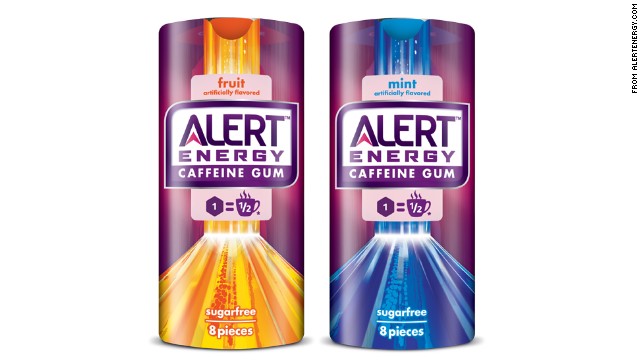
But the possibility that kids, in particular, will be attracted to extra-caffeinated foods/drinks through marketing (advertising, package/label design, image, brand associations, etc.) is a growing problem. Two weeks ago, Wrigley decided to temporarily stop making its newly-launched Alert Energy Caffeine Gum after FDA regulators raised serious safety concerns about the effect on kids, adolescents, and adults. As the product photo shows, one piece delivers the caffeine equivalent of half a cup of "high test" (non-decaf) coffee.

Wrigley's president told reporters: "After discussions with the FDA, we have a greater appreciation for its concern about the proliferation of caffeine in the nation's food supply. There is a need for changes in the regulatory framework to better guide the consumers and the industry about the appropriate level and use of caffeinated products."

Wrigley is not alone in facing this changing marketing environment for extra-caffeine foods and beverages. Monster Beverage, which makes energy drinks containing caffeine, is battling San Francisco in court over allegations of marketing to youngsters, which Monster denies. Other jurisdictions, including Chicago and New York's Suffolk County, are considering how to deal with the potential marketing of caffeine-enriched foods and drinks to minors. Australia has even gone so far as to prevent the importation of caffeinated Dr Pepper and other non-cola, non-energy drinks that contain caffeine. The social-cultural environment, as a result, is also a factor. 

In the face of caffeinated foods like Wired Waffles and Cracker Jack'd Power Bites, the FDA is now rethinking how it regulates added-caffeine foods/drinks following dozens of reports about adverse reactions possibly linked to ingestion of energy "shots" and other super-caffeinated products.

Meanwhile, Consumer Reports has tested commonly-available energy drinks, listed the level of caffeine in each, explained the health concerns, and sums things up this way: "An occasional energy drink is probably fine for most adults." Adults, not kids.

Wednesday, November 21, 2012

Marketing to Millennials: Value, Shared Experiences, Sustainability

One-third of the world's population can be classified as the Millennial generation (roughly, those born after 1980), according to recent research by Viacom. Not surprisingly, the economy stands out as an important factor affecting their use of credit cards and buying decisions in general. This segment has a unique attitude and perspective on the world, shaped by the economic turmoil of recent years plus their upbringing, their cultural backgrounds, and their life experiences.

As a result, marketers are targeting the Millennial generation with distinctive, value-rich products for their preferences, using quirky, nonconformist communications that avoid the hard sell (unless tinged with irony, of course). Even the shopping experience itself is different for this generation, often mobile or digital, often shared, and heavy on the search for local and/or unique "personality" products to express personal values.


Take the Chevy Spark, for instance, a sub-compact car that comes in eye-catching colors/designs (see above) and is also available with an electric motor. The car is affordable, the design grabs the eye, the size is just right for city driving and parking, and the gas efficiency makes sense for a Millennial buyer making a first or second new car purchase. This is not your grandpa's car--it's clearly a "now" model designed for tastes and preferences of the target market.

Then there's the market for travel services, such as airline tickets, lodgings, and tourism. Research presented at a travel industry meeting  shows that Millennials like to travel with friends and expect value for the money (not necessary budget, but value for the money). Unlike traditional "group tours," the goal is to have a shared experience, and sustainability is a major factor in many travel decisions made by this cohort.

Although some experts suggest that Millennials are anything but brand-loyal, remember that they're very open to trying new brands and products (no-brands included!) and like to share the results with friends. Any brand or product that makes the grade has a good chance of being in the consideration set next time around.


Monday, May 7, 2012

Naming the Next Gen

Baby Boomers are the most identifiable generational segment in America, covering the 78 million people born from 1946 to 1964. Gen X is defined as the 46 million people born from 1965 to 1980. The Millennials are the 76 million Americans born from 1981 to 2000 (according to Pew) or 1982 to 2004, according to Neil Howe. Gen Y? Roughly overlaps with the Millennials.

But what will the next generation segment be called? Jean Twenge has been calling the next gen iGen for the past six years. She also suggests Multi-Gen as a segment name for this generation that follows the Millennials.

We like to nickname generations because, like a brand, it instantly identifies the segment in a broad way. When marketers think about "Baby Boomers," they envision people who were teenagers in the 1960s and who are now in or approaching their retirement years. Millennials are in their teens, "born digital."

These generational descriptions are shorthand for some of the common characteristics of each segment. Of course, only by digging beneath the surface can companies really understand what motivates and energizes their targeted segments within each generation.