Tuesday, September 20, 2016

Fast-Food Products Build Buzz and Brands

The big fast-food chains are busy testing new menu items, to sharpen brand differentiation, keep loyal customers returning to try new choices, build buzz, and possibly find the next new food trend.

  • Burger King is introducing a buzzy new item named Cheetos Chicken Fries which--as the name suggests--are "fries" made from chicken and coated in Cheeto-flavored breading. Co-branding adds a marketing hook too.
  • McDonald's recently tested a mozzarella - pesto melt sandwich in California. It's also fine-tuning its popular All-Day Breakfast menu, which is helping to boost revenues.
  • Chick-fil-A is testing healthy menu items featuring grains that aren't yet mainstream among fast-food rivals, such as quinoa and chia seeds, which will differentiate the brand.
  • Carl's Jr and Hardy's are adding steak to the breakfast menu, part of a trend toward beefing up (pun intended) the morning meal offerings to grab a larger share of breakfast revenues.

Wednesday, September 14, 2016

Airbus's Strategic Vision

Ten years ago, I began this blog by contrasting the long-term projections of Airbus and Boeing, and the effect on their strategic decisions. Airbus saw great potential in building a huge jet to fly 500+ passengers between hubs...Boeing saw more potential in not-so-huge jets for point-to-point flights.

On its corporate website, Airbus says this about the A380:
Designed for air transport needs in the 21st century, its unique size allows airlines to maximize their revenue potential through an optimized, segmented cabin. 
Now Airbus has learned that Singapore Airlines will not renew its ten-year lease for the gigantic A380 passenger jet. Other carriers are thinking about smaller Airbus jets instead. Filling so many seats on the A380 is one element of how airlines consider what planes to lease or buy. Fuel economy is another element. Each airline also has its own strategy for satisfying customers' needs and making a profit.

Emirates Airlines has successfully built high volume on the basis of its A380 jets. The President of Emirates tells Business Insider: "Airport congestion around the world is getting worse. And up-gauging aircraft is a solution for this." Meaning: Emirates uses A380s to fly a lot of passengers from one huge hub to another.

The double-decker configuration requires a special airport gate, which means airlines must schedule carefully. In fact, although Chicago's O'Hare has had runway capacity to fit the A380 for a few years, it has only one gate for the jumbo jet (more are in future plans).

So Airbus's strategic vision has faced turbulence in part because of infrastructure issues and in part because of how its customers plan for their customers.

Monday, September 12, 2016

Next Distribution Frontier: Drones

The idea of delivering orders via drone is catching on. Why? Because marketers see a lot of opportunity in same-day delivery, and drones can take a load off traditional mechanisms like trucks/vans/cars/motorcycles. The cost per package delivered is still being assessed, but likely it would be greener, cheaper, and much faster than delivery by traditional methods.

Domino's is already testing drone delivery of pizza in Auckland, New Zealand. 7-Eleven is also testing drone delivery, having successfully delivered Slurpees and food to a family in Reno this year.

Amazon has been championing this possibility for a while and conducting tests. It says: "Amazon Prime Air is a future service that will deliver packages up to five pounds in 30 minutes or less using small drones. Flying under 400 feet and weighing less than 55 pounds, Prime Air vehicles will take advantage of sophisticated “sense and avoid” technology, as well as a high degree of automation, to safely operate beyond the line of sight to distances of 10 miles or more."

Now Alphabet, Google's parent company, has been approved to test its drone delivery in selected areas. Project Wing, Alphabet's drone unit, is partnering with Chipotle to test delivery of burritos to customers on the Virginia Tech campus. The head of Project Wing observes: "It's the first time that we're actually out there delivering stuff to people who want that stuff." The test will determine how well packaging protects the "stuff" and whether the "stuff" arrives warm.

Tuesday, September 6, 2016

Transparency in Tweets

WHO'S BEHIND THAT TWEET?
Advertising Standards Canada (ASC) is formalizing guidelines for advertising use of Twitter, Instagram, YouTube, Snapchat, and other social media. "Endorsement or testimonials must disclose any material connection between the endorser, reviewer or influencer and the entity that makes a product or service available," explains an ASC exec.

Canada wants to ensure that social media users can tell the difference between non-sponsored and sponsored tweets (or other posts that have been paid for).

The US Federal Trade Commission has already solidified guidelines for disclosure, but Canada's rules don't go into effect until early in 2017.

Meanwhile, the US FTC is pushing celebrity endorsers to be more transparent about being paid to promote products. It recently complained about Warner Bros using influencer-campaigns (paying social media celebrities to say something positive about a game, for example) that lacked "clear and conspicuous" disclosures.

Given the viral nature of celebrity opinions, this is an area where more transparency is needed to ensure that consumers get the full picture of who's behind that tweet or YouTube video or any other message promoting a product. As a result, marketers must stay updated on the regulatory environment to be in full compliance (and keep their endorsers updated on compliance standards, too).

Tuesday, August 30, 2016

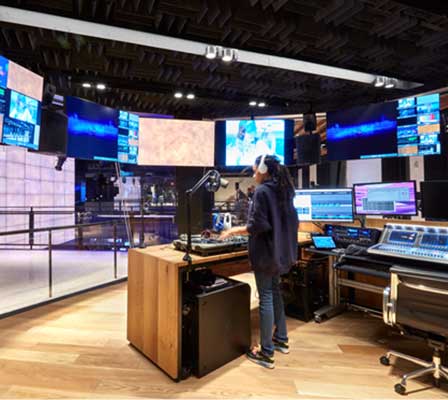
Samsung 837 as Brand Experience

Samsung 837 opened in a hip area of New York City six months ago. Here's how the company describes this retail space on its website:
"This is Samsung 837, where technology and culture collide.
Located in the heart of the Meatpacking district in NYC, Samsung 837 combines art, fashion, technology, and sport in unprecedented ways. It’s not a store, but a new kind of place filled with ideas, experiences, and Samsung’s cutting edge devices."
Not a store. Samsung isn't selling any products at the 837 location. It's selling the Samsung brand experience--come in and experience its electronics and concepts, up close and personal. New product introductions? Yes, available to opinion leaders, influential early adopters, and potential customers who want to see and try the latest in personal or wearable tech.

Especially virtual reality. For the Olympics, Samsung 837 offered a special virtual reality feed of highlights in Rio, free to visitors. Also on the calendar are lots of events to attract visitors and keep Samsung 837 in the public eye.

Meanwhile, Samsung is fine-tuning its in-store strategies for selling through Best Buy and other retailers, to differentiate its brand and its products. 

Wednesday, August 24, 2016

Marketing Private Brands

Private brands--also known as private-label--are created or owned by retailers and other channel intermediaries.

Supermarkets are heavily into private brands, as are many general merchandise retailers like JC Penney (which owns Arizona, shown at right). Why? Because these are exclusive to the store and, just as important, they have higher profit margins.

Twenty years ago, an article in the Harvard Business Review said:
... private-label strength generally varies with economic conditions. That is, private-label market share generally goes up when the economy is suffering and down in stronger economic periods.
Today, however, the economy is strengthening and so are private brands. For example:
  • Kohl's is seeking a turnaround based on private brands such as Sonoma, Croft & Barrow, and others that are or have been mainstays of its revenue base. However, how will this resonate with shoppers seeking well-known national brands?
  • JC Penney is also putting more emphasis on private brands such as St. John's Bay and Arizona as it seeks a turnaround. In 2015, private brands accounted for 52% of Penney's sales--but by 2019, the marketing goal is to have private brands contribute 70% of Penney's sales.
  • Target wants shoppers to prefer its private-label food products, marketed under brands such as Market Pantry and Simply Balanced.
Private brands are here to stay. The question is, how much emphasis is too much emphasis?

Thursday, August 18, 2016

Apple Pay Competes in Contactless Payments

Apple Pay continues to expand its reach in the US and abroad. Above, Apple Pay is accepted in a New York vending machine, as contactless payments gain ground little by little.

According to Apple's CEO, Apple Pay accounts for 3 out of every 4 contactless pay transactions in the US. By the end of 2017, Apple Pay will be honored by an estimated 76% of US retailers.

The mobile payments world is not only highly competitive, it's still fluid as the technology evolves and consumer behavior evolves. Some consumers are trying Apple Pay but not adopting it as a payment habit.

So Apple Pay and its competitors continue to try to influence consumers' payment choices and brand preferences. Stay tuned.

Monday, August 15, 2016

Brands Pin, Pin, Pin on Pinterest

A growing number of brands are doing more on Pinterest to promote new products, cast a wider net, strengthen relationships with brand fans, and reinforce brand associations.

Pinterest, and its Promoted Pins, have attracted interest from L'Oreal, Burberry, La Mer, and other established brands.
  • L'Oreal studied one of its Pinterest campaigns and find gains in new product awareness, message associations, and purchase intention. 
  • Burberry is partnering with Pinterest for a personalized campaign starring its new Cat Lashes mascara.
  • La Mer is seeking to stimulate Pinterest word-of-mouth for its skincare products.
Oh, and that old "Buy It" button? Goodbye--now Pinterest users can simply click to "add to bag" and shop their way across boards and platforms.

Monday, August 8, 2016

Marketing Nordstrom in Canada: Customers First

Based in Seattle, the upscale fashion specialty store Nordstrom sums up its marketing purpose this way:
Since 1901, we've been committed to providing our customers with the best possible service—and to improving it every day. 
Nordstrom has three full-service locations in Canada and three more on the way. First to open will be the new store at Toronto Eaton Centre in September, followed by the new store in Yorkdale Shopping Centre.

At left, one of the ads paving the way for these full-service store openings. You First is the message, reinforcing Nordstrom's marketing positioning and a key point of differentiation.

Nordstrom has a well-deserved reputation for service--which will help it compete in the increasingly crowded Canadian retail market. The company is also opening additional Nordstrom Rack stores with off-price/discount merchandise, adding to its strength in relatively affordable fashion.

Tuesday, August 2, 2016

U.S. Companies Feel Impact of Brexit

Five weeks ago, a U.K. referendum resulted in the forthcoming exit of the country from the European Union. The timetable isn't yet known, but the country is preparing plans for an orderly exit and the simultaneous negotiation of new trade pacts with European trading partners.

Across the pond, U.S. companies are feeling the impact of Brexit. First, the currency issue is changing profit and cost projections--because of the see-saw value of the pound sterling versus the U.S. dollar. When the value of the pound drops, the dollar is stronger, a concern for U.S. companies (like Carnival cruise lines) doing business in U.K. markets. Currency fluctuations change the cost of supplies purchased by U.S. firms from U.K. sources--uncertainty that affects not just the bottom line but the marketing plans for the remainder of 2016.

Multinational banks based in the U.S. are watching to see whether London will remain a financial center and gateway to Europe. All have contingency plans for dealing with the challenges if they decide to relocate for better access to European customers (commercial customers as well as consumers). Some mergers and acquisitions between U.K. firms and others outside the country are being postponed or taken off the table due to the uncertainties and the financial repercussions of Brexit. Airlines are reevaluating routes to and from (and within) U.K. destinations.

A lot of U.S. companies buy and sell in the U.K., and Brexit appears to be dampening the economic climate in Great Britain and beyond as firms try to determine a way forward during this transition period. Consumer confidence is down in the U.K. and the result is likely to be slower spending, which will hurt marketers that target consumers.

How will U.K. and international holiday spending be affected? What about "affordable luxuries" that tend to do well despite economic ups and downs? And global travel?